

Honey and maple syrup both claim the title of “natural sweetener,” but they behave differently in your kitchen. Knowing when to use which can take your recipes from average to exceptional.
Here’s how they stack up
The Basics
- Maple syrup comes from the sap of Canadian maple trees, boiled down into pure, golden sweetness.
- Honey is made by bees from flower nectar, filtered and jarred.
Both are natural, unrefined, and delicious, but the differences matter once heat, moisture, and flavour come into play.
Flavour Profiles
- Maple syrup: woody, toffee-like, slightly smoky, rounded.
- Honey: floral, fruity, sometimes sharp or citrusy depending on the flowers.
Honey varies wildly by origin. Maple syrup delivers a more consistent, mellow sweetness, ideal when you want the main ingredients to shine.
How they behave in cooking:
Maple syrup:
Milder sweetness
Smooth and pourable texture
Browns more slowly when heated
Neutral in acidity
Adds shine and light moisture
Offers a balanced flavour in baking
100% vegan
Honey:
Slightly sweeter
Thick and sticky texture
Browns faster due to higher fructose
Slightly acidic
Adds softness and helps retain moisture
Creates a richer flavour but can over-brown in baking
Not vegan
When to use each
Choose maple syrup for:
- Roasting vegetables or meats (less burn risk, cleaner glaze)
- Drinks and cocktails (dissolves easily)
- Dressings and marinades (balance savoury flavours)
- Sweetening porridge or yoghurt (gentler taste)
Choose honey for:
- Baking cakes and biscuits (locks in moisture)
- Tea or lemon drinks (soothes and sweetens)
- Glazing nuts or fruits (caramelises beautifully)
If you’re after depth, balance, and a vegan-friendly sweetener, go for pure maple syrup.
If you want floral intensity or moisture retention in baking, honey has its place.
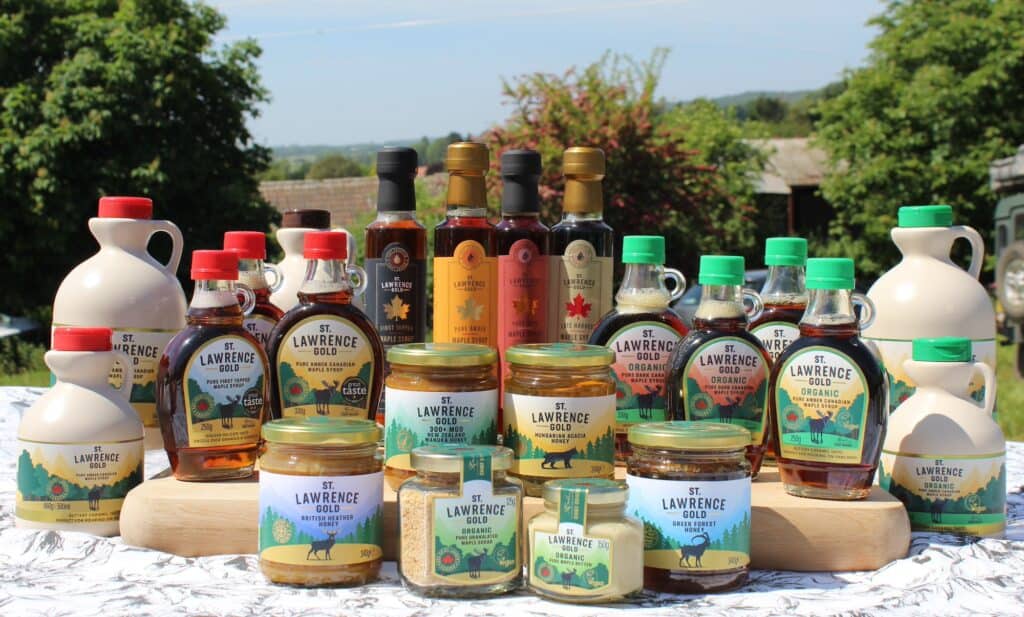
Both deserve a spot in your kitchen, and with St Lawrence Gold, you can trust every drop comes straight from nature, bottled or jarred at source and sent straight to you.